
Affiliate Disclosure: Let’s get this out of the way. I recommend products I use and love. This post contains affiliate links. If you buy through them, I earn a commission at no extra cost to you, which helps me run EasyEnigma and keep decoding the game. Thank you for your trust.
I remember the feeling perfectly. The exhaustion after wasting hours watching some “expert” on the internet, buying into their hype, only to realize they sold me a dream and left out the critical details. It’s a tiring feeling, a promise of a fantasy when all you want is a result. That experience is why EasyEnigma exists: to give you the complete system, not just the missing pieces. This starts with my most powerful weapon against chaos: a simple blog post template google docs.
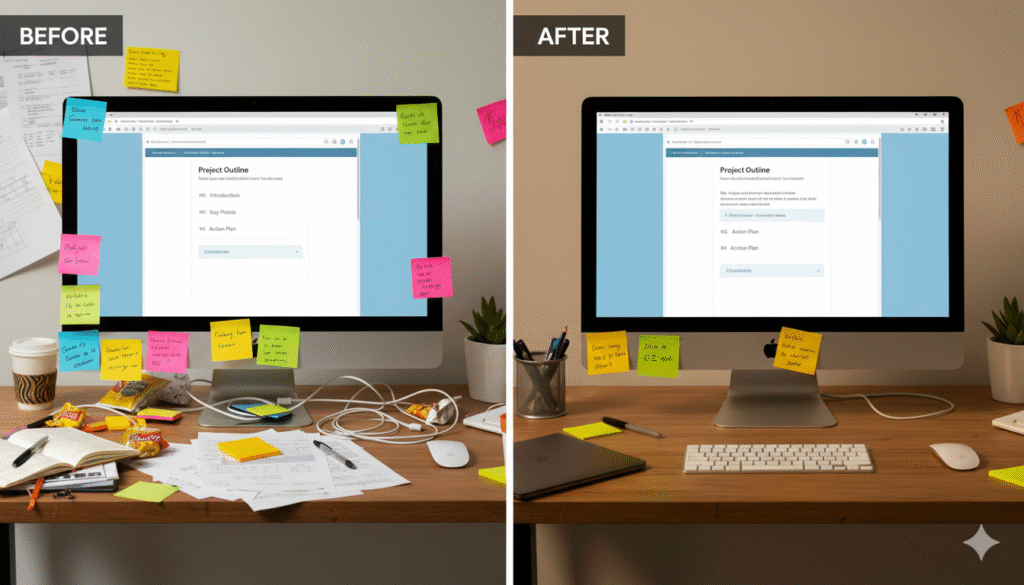
Before I built this system, my process was a mess. A few points here, some ideas there, and a heavy reliance on AI to stitch it all together in the final moments. But the core ideas, the soul of the article, had to be mine. Staring at that blank, blinking cursor on a white page was paralyzing. It felt like standing at the base of a mountain with no map. This is where my custom blog post template google docs changed the game entirely.
It isn’t just a document; it’s a weapon against “white page syndrome.” It forces me to answer critical, personal questions right from the start, planting the seed for a successful article before I even write the first sentence. With a powerful blog post template google docs, you’re never starting from zero. You’re starting from a position of control.
Contents
Why a System Is Your Secret Weapon (The Elon Musk Mindset)
My hero, Elon Musk, isn’t just building cars and rockets; he’s building systems. He’s obsessed with creating repeatable, optimized processes that lead to victory. For a beginner aiming to build an empire with minimal resources, adopting this mindset isn’t a luxury; it’s a necessity. Your first “Musk-like” step is creating a powerful blog post template google docs.
Think about it. This isn’t just about one article. It’s about creating a structure for success that you can repeat over and over. A well-designed blog post template google docs becomes your content factory’s assembly line. Each time you use it, you’re not just writing; you’re executing a proven formula designed to convince Google that your content is essential. This is how you build an empire—not with random acts of creativity, but with a relentless, systematic approach.
This is especially true if you’re working alone. Right now, I have complete control over EasyEnigma, and my blog post template google docs is my playbook. I’ve documented every successful step within it. When the day comes to hire a team, I won’t have to explain my philosophy from scratch. I’ll just hand them the template. It’s the ultimate tool for scaling your vision.
By documenting your successful steps in a blog post template google docs, you are creating a blueprint for your future team, ensuring your winning formula can be replicated and scaled.
“But Won’t a Template Kill My Creativity?” (The Launchpad Myth)
This is a fear I hear from a lot of creative people. They feel a template will box them in, turning their art into a robotic task. I used to be a chaotic, scattered creative mind myself. My ideas were everywhere. A template didn’t kill my creativity; it gave it a purpose. It tamed the chaos and made my ideas profitable. You need to stop thinking of a blog post template google docs as a cage and start seeing it for what it truly is: a launchpad.
I never felt my creativity was restricted by a template. In fact, it did the opposite. As a creative mind that is often scattered, the structure provided by my blog post template google docs helped me channel that energy productively. It gave me a framework to build upon, allowing me to focus my creative power on what truly matters: the story, the message, and the value, instead of worrying about formatting and SEO rules every single time.
This is the “Eureka!” moment I had. The template handles the science of SEO, so I can focus on the art of writing. With a solid blog post template google docs, your ideas don’t get trapped; they get launched faster and fly higher than ever before.

Deconstructing My $100 Genius Blog Post Template Google Docs
Alright, let’s open the vault. This isn’t just a random collection of headings. This is a system engineered to hit every single checkmark in Rank Math, pushing your content towards that perfect 100/100 score. Every part of this blog post template google docs has a strategic purpose.
Part 1: The SEO Foundation (Basic SEO)
This is the non-negotiable bedrock of the entire structure. Getting this part right in your blog post template google docs is 50% of the battle.
- Focus Keyword in SEO Title: The template has a dedicated slot for the title, reminding me that the primary keyword must be there, preferably within the first 50 characters. This is the first signal you send to Google. A good blog post template google docs makes this impossible to forget.
- Focus Keyword in Meta Description: Right below the title slot is a field for the meta description, with a character counter. The rule is simple: include the keyword naturally in a compelling sentence between 120-160 characters. My blog post template google docs ensures I never skip this crucial step.
- Focus Keyword in URL: The template reminds me to make the URL (slug) clean, short, and contain the keyword. Your URL should be less than 75 characters. A clean URL in your blog post template google docs structure is a massive trust signal for both users and search engines.
- Focus Keyword in the First 10%: My template’s introduction section is designed to force the keyword into the first paragraph naturally. You’re reading an example of this right now. A properly structured blog post template google docs makes this feel effortless.
- All Keywords in Content: The template has checklists to ensure all primary and secondary keywords are present in the body. They must be integrated naturally. This is a core function of an effective blog post template google docs.
- Content-Length: To hit 100/100 in Rank Math, your article needs to be epic. My template is structured with enough sections to easily guide me toward writing at least 2,500 words. Don’t fear the length; a good blog post template google docs breaks it down into manageable chunks.
The foundation of any successful article lies in its basic SEO structure. A meticulously designed blog post template google docs automates these best practices, ensuring you build on solid ground every single time.
Part 2: The Competitive Edge (Additional SEO)
This is where we separate the amateurs from the pros. These details in your blog post template google docs are what push you to the top of the search results.
- Keywords in Subheadings (H2, H3): My template uses a nested structure for H2s and H3s, with prompts to include primary or secondary keywords in them. This organizes your content for readers and tells Google exactly what each section is about. Your blog post template google docs must have this hierarchical structure.
- Keyword in Image ALT Text: The template includes placeholders for images with a reminder: “ALT Text: [Include Focus Keyword Here]”. At least one image must have the keyword in its ALT text. It’s a simple rule that so many people forget, but my blog post template google docs makes it second nature.
- Keyword Density: My goal is a sweet spot between 1% and 1.5%. How do I track this? After writing, I do a simple Ctrl+F in my blog post template google docs to see how many times the keyword appears and adjust accordingly. Never, ever go above 2.5%, or you’ll risk looking like spam.
- External Links: My template has a “Resources” section in the outline, prompting me to link to at least one high-authority external source. This shows Google you’ve done your research. For example, many beginners have questions about what to write, a query often seen on platforms like Quora. A good blog post template google docs should encourage this.
- Dofollow External Link: The template reminds me that at least one of these external links must be “dofollow” to pass authority and build digital relationships. This is a pro-level tip that should be in every serious blog post template google docs.
- Internal Links: I have a checklist at the bottom of my blog post template google docs to add 2-3 internal links. This keeps readers on your site longer and creates a strong network of content. For instance, this article logically connects to my pillar post on how to start a blog.
- Unique Focus Keyword: The final check in my blog post template google docs is to ensure I haven’t used this exact focus keyword for any other published article. This prevents you from competing with yourself.
Moving beyond the basics is what defines a winner. Your blog post template google docs should be your strategic guide, reminding you to build internal links, cite external authorities, and optimize your media.
Part 3: The Psychology of Attraction (Title Readability)
If SEO is the science that gets you noticed by Google, readability is the art that gets you loved by humans. A visitor who clicks away in seconds is a negative signal to Google. This is why my blog post template google docs has a dedicated section focused entirely on crafting an irresistible headline.
- Keyword at the Beginning: The template has a rule: the focus keyword should appear in the first 50% of the title. This immediately tells the reader and Google that you have the answer they’re looking for. A good blog post template google docs enforces this discipline.
- Sentiment in Title: Titles must trigger emotion. My template includes a checklist with positive (Genius, Unbelievable, Secret) and negative (Warning, Mistake, Avoid) words. An emotional title gets the click. This is a core component of my blog post template google docs.
- Power Words in Title: The template links to a list of “Power Words.” Words like “Steal,” “Unlock,” or “Instantly” create urgency and curiosity. You must include at least one.
- Numbers in Title: Numbers promise a specific, measurable value. “7 Steps,” “My $100 Template,” “Save 20 Hours.” My blog post template google docs has a mandatory field for a number because it simply works.
A title is a promise. By engineering it for emotion, power, and specificity within your blog post template google docs, you dramatically increase the chances of that promise being fulfilled with a click.
Part 4: The Art of Effortless Reading (Content Readability)
Once they’ve clicked, your job is to make reading feel effortless. A wall of text is a death sentence for engagement. My blog post template google docs is designed to create a visual, easy-to-scan experience.
- Table of Contents: For any article over 1,000 words, a table of contents is non-negotiable. My blog post template google docs has a placeholder at the top to remind me to insert the Rank Math shortcode. It respects the reader’s time and improves SEO.
- Short Paragraphs: This is the golden rule. No paragraph in my template is allowed to exceed 120 words. Most are 2-3 sentences. Short paragraphs are breathable and mobile-friendly, a fundamental principle baked into the structure of my blog post template google docs.
- Use of Media (Images & Videos): To hit 100/100, you need at least 4 pieces of media. My blog post template google docs has designated “media break” sections throughout the outline. This breaks up the text and provides visual context. Having a fast and reliable host is critical for a media-rich site, which is why a Hostinger Student Discount can be a game-changer for those on a budget.
Great content isn’t just about what you say; it’s about how you present it. A readable blog post template google docs uses short paragraphs, media, and navigation to guide the reader effortlessly from the first word to the last.

The $1 to $1,000 Formula: Turning Your Template into a Money Machine
Here’s where the system becomes truly powerful. As a results-focused person, I see my blog post template google docs not just as a writing tool, but as a money-making asset. The logic is simple and brutal.
If you have a successful template that brings you one dollar every time you use it, you must use it a thousand more times to earn $1,000. It’s that simple. This is an equation. And the beauty of this system is that it’s designed for evolution. Each time you use your blog post template google docs, you can tweak one small thing. Did the change improve results? Great, it’s now part of the template. Did it fail? Revert and try something else.
Over time, your blog post template google docs stops being a mere template. It becomes a distillation of your experience, a summary of your wins, a highly optimized system for generating revenue. Eventually, the template itself becomes so valuable that you could sell it for hundreds of dollars, because it’s no longer just a document; it’s a proven business model.
To make this formula work, your articles need to live on a platform that can handle the traffic and load instantly. Building a masterpiece on a weak foundation is a recipe for disaster. This is why I build everything on Hostinger. Their performance is top-tier, and the value is unbeatable.

How to Avoid the #1 Beginner Mistake
What’s the biggest mistake beginners make when creating their first blog post template google docs? They rely on their own inexperienced minds. They try to reinvent the wheel.
Don’t do this. You must consult two key allies: Artificial Intelligence and your successful competitors. Study the articles that are already winning. Ask an AI to analyze their structure. Use these insights to build your first version. Starting with a proven framework saves you from the painful trial-and-error that causes so many to quit. Your first blog post template google docs should be a hybrid of proven success and your unique voice.
From Scattered to Focused: My Personal Journey
I used to be the king of distraction. My brain was a whirlwind of ideas, and I jumped from project to project, always the “founder” but never the “finisher.” This was the “curse of multiple potentials.” Now, things are different. Working on EasyEnigma feels like I have “absolute focus.” Why? Because I follow a system. My files are organized, my steps are documented in my blog post template google docs, and my path is clear. All I have to do is open the file and execute. Honestly, it doesn’t get easier than that.
This journey taught me that practical application is everything. You can watch hundreds of videos and read countless articles on “how to write,” but nothing happens until you apply that knowledge. The price of an answer is time and effort. You have to take the theories you learn and test them in the real world to see what works for your niche. This is how you build a real skill, and a solid blog post template google docs is the laboratory where you run these experiments.
Frequently Asked Questions (Your First Doubts Answered)
Here are some common questions beginners have. The answer to almost all of them is: build a system.
Question 1: Is a Blog post template Word better than a google docs blog post template?
While a microsoft word blog post template is great for offline work, it lacks the collaborative power and cloud-native features of Google Docs. For a modern digital workflow, nothing beats a google docs blog post template because of its seamless sharing, auto-saving, and integration capabilities. The strategic principles in my system can be adapted to Word, but they are designed to thrive in the collaborative Google environment.
Question 2: Where can I find a Blog post template Google Docs free or as a Blog post Template PDF?
The internet is full of generic free templates, but the most powerful one is the one you build yourself. This entire article is your guide to creating the ultimate Blog post template Google Docs free of charge, tailored to your exact needs. Once you’ve perfected your template, you can easily save it as a PDF for static sharing, but the real power lies in the living, evolving document you create using my blog post template google docs.
Question 3: How to make a blog post on Google Docs that is actually SEO-optimized?
You don’t just “make” a blog post; you engineer it. The secret to creating an SEO-optimized article is to stop writing into a void and start using a system. The core of this system is a strategically structured blog post template google docs like the one I’ve broken down for you here. It forces you to follow a winning SEO formula every single time.
Question 4: What should a Blog post template for students include?
A Blog post template for students should be robust. Beyond the standard SEO elements, it should include sections for research notes, source links for citations, and a clearly defined thesis statement area at the top. Using a structured blog post template google docs not only helps with assignments but also builds a professional skill for their future career.
Question 5: What’s the difference between Canva Blog post templates and a Google Docs template?
This is a crucial distinction. Canva Blog post templates are for designing the visual assets for your article—your featured image, infographics, and social media graphics. A blog post template google docs, on the other hand, is the architectural blueprint for the content itself—the structure, the headings, the SEO flow, and the written word. They are two essential tools that work together, not against each other.
Question 6: Can I use Google templates CV for my blogging career?
Absolutely, and here’s how they connect. Your blog, built using a powerful blog post template google docs, is what establishes your authority and expertise in a niche. Once you’ve built that authority, a professional CV created from Google templates CV becomes the tool you use to leverage that authority for freelance writing gigs, consulting opportunities, or even a full-time job. The blog builds the brand; the CV sells it.
Conclusion: Done Is Better Than Perfect
My very first article on this site is still being updated. It’s successful and ranks well, but it’s never “finished.” Laws change, strategies evolve, and there’s always room for improvement. The lesson is powerful: you must launch your project and then improve it over time. Waiting for perfection is a losing game.
The monster of “Perfectionism” dies the moment you hit “publish” on something that is simply “done.” Your first blog post template google docs won’t be perfect. Your first article written with it won’t be perfect. But it will be real. It will be an asset. It will be the start of your empire.
Stop waiting for the perfect moment. Open a blank Google Doc right now, and start building the system that will build your future.

Enjoyed this breakdown? Found it valuable? Share it with a fellow builder who needs to hear this. Let’s declare war on the blank page together.