
Affiliate Disclosure: Let’s get this out of the way. I recommend products I use and love. This post contains affiliate links. If you buy through them, I earn a commission at no extra cost to you, which helps me run EasyEnigma and keep decoding the game. Thank you for your trust.
I swear, if I got a dollar for every well-meaning person who told me “You’ll fail because you never stick with anything,” I’d be a millionaire by now 😂. For years, they were right. I was the king of starting things and the master of getting bored.
I jumped from project to project, always chasing the next shiny thing. The whispers from doubters were my constant soundtrack. They didn’t understand what blogging was in my head; they saw it as another fleeting hobby. They’re still waiting for me to “get lucky.” They don’t see the planning, the late nights, the failures, and the strategic decisions. They will just see the results and call it luck. And that’s okay. Because you and I know the truth about what blogging really is.
It’s not about luck. It’s about building a machine. You’re here because you feel a nagging sense that the traditional path is a dead end. The school system, while it teaches us fundamentals, doesn’t prepare us for a job market that changes faster than a TikTok trend. You’re looking for an escape plan. You’re looking for control. This guide isn’t a theoretical lecture on what blogging means; this is me handing you the blueprint to the most powerful escape vehicle ever invented. So buckle up.
Contents
1. what blogging Is (And What It Absolutely Is NOT)
Let’s burn the old dictionary definition. For decades, the world has told you that a “blog” is an online diary, a personal journal, a place to share your travel photos with your aunt. That definition is dead. For us, the empire-builders, that’s not what blogging is at all.
A blog is not a liability that consumes your time; it’s an asset that generates freedom. It is your weapon against a brutal and unforgiving job market. Here at EasyEnigma, we don’t see the educational system as a complete failure, but the job market has become a wild beast, changing faster than the educational system can adapt. The question you should be asking is not what you will do in this tough job market, but how you can make it irrelevant to your success, this is what blogging will achieve for you.
So, what blogging really is, in today’s world? It’s the process of building a digital platform that you own and control completely. It’s a space where you can share your knowledge, build a community, and create an income stream that isn’t tied to a 9-to-5 job. Think of each article you write not as a diary entry, but as a digital employee working for you 24/7. Some of these employees will work during specific “seasons” (like Black Friday), while others will bring in steady traffic all year round by targeting a “blue ocean” away from the competition. The secret to what blogging success is knowing how to build and manage this team of digital assets.
You’re not just a writer. You’re an architect, a strategist, and the CEO of your own media company. You’re building a system where you provide immense value upfront, and in return, you build something far more valuable than a paycheck: trust. And trust, my friend, is the currency of the new economy. Truly understanding what blogging entails is understanding this fundamental shift from being a content consumer to a value creator. For a more technical breakdown, you can check out this guide from Hostinger.
In the new economy, what blogging truly represents is the creation of digital assets that build trust at scale, ultimately leading to financial and personal freedom outside the traditional system.

2. The Two Mindsets: The Hobbyist vs. The Empire-Builder
The moment you decide to start a blog, you stand at a crossroads. There are two paths, and the path you choose will determine everything. It’s the difference between building a sandcastle and building a fortress. This isn’t about talent; it’s about your core understanding of what blogging is meant to achieve.
On one side, you have the Hobbyist Blogger. This person is often incredibly creative and passionate. They write when inspiration strikes. They pour their heart into a beautifully crafted article, hit publish… and then disappear for three months. How many articles will they write before boredom and a lack of results creep in? Probably two. The Hobbyist sees what blogging is as an outlet, a form of self-expression. They write for themselves, which is a noble act, but a terrible business strategy.
On the other side, you have the Empire-Builder. This person treats their blog like a startup from day one. They show up consistently, even when no one is reading, because they know Google is always watching. They understand that what blogging entails is a combination of art and science. They create content for their audience and for search engines. They don’t just write; they research, they analyze, they build systems.
The Empire-Builder understands that the first two months of work might feel like shouting into a void, and that’s okay. When I started EasyEnigma, I wrote articles every single day for two months, learned a ton, then realized I was doing it all wrong. So, I deleted everything and started over from scratch 😂. I don’t regret it for a second, I just treated it as my training period for understanding what blogging really requires.
Here’s a breakdown:
| The Hobbyist | The Empire-Builder |
| Writes when inspired | Follows a content schedule |
| Writes for themselves | Writes for an audience and for Google |
| Hopes for traffic | Builds traffic systems (SEO) |
| Views the blog as an expense | Views the blog as an asset |
| Gives up when bored | Stays consistent, even when it’s hard |
The fundamental difference lies in intent. For the Hobbyist, the blog is the product. For the Empire-Builder, the blog is the engine that builds the empire.
3. The Elon Musk Blueprint: A System, Not a Job
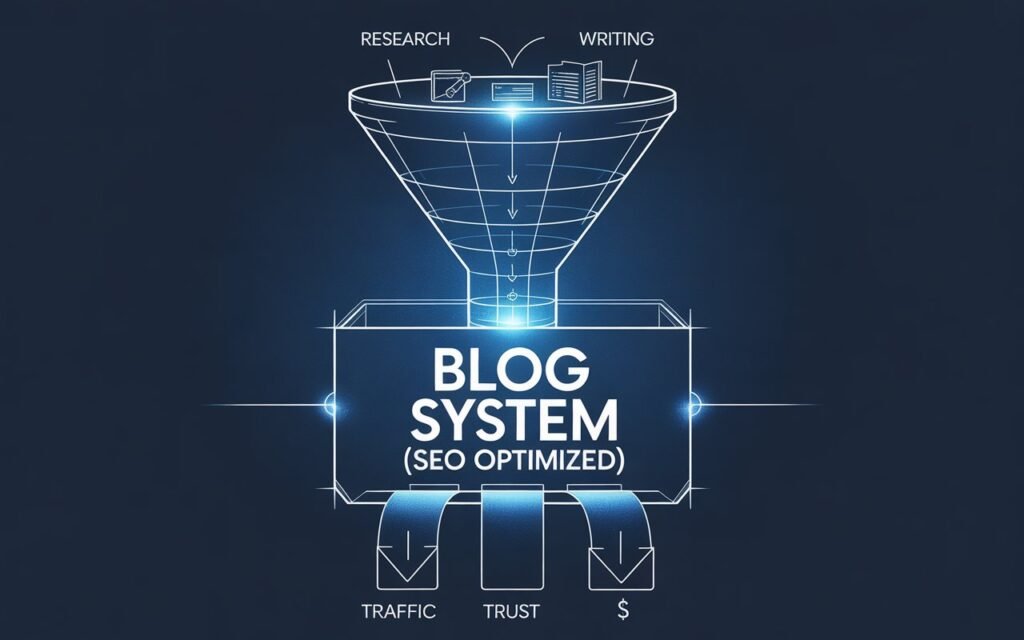
If there’s one thing to learn from Elon Musk, it’s this: he doesn’t just do jobs; he builds systems. He doesn’t just build a car; he builds the Gigafactory (the system) that builds thousands of cars. This is the exact mindset you must adopt to succeed in this game. You have to understand that what blogging is, at its core, is the design of a system. A job is something you work for. A system is something that works for you.
I’ve always been obsessed with building automated systems, whether it was in Minecraft or with tools like n8n. I love creating a process, seeing its output, and then refining it to be more powerful and efficient. That’s precisely what blogging is for the Empire-Builder. You’re not just writing an article. You’re designing an automated asset-creation machine.
Here’s how the system works:
- Input (Research & Creation): You identify a problem your audience has (through keyword research). You then create the best piece of content on the internet to solve that problem. This is the raw material.
- Process (SEO & Promotion): You optimize that content so Google can understand it and show it to the right people. You build pathways (links) to it from other places on the internet so it gets discovered. This is the assembly line.
- Output (Traffic, Trust & Revenue): If you did steps 1 and 2 correctly, the system starts producing outputs on its own. It generates traffic while you sleep. That traffic builds trust in your brand. That trust eventually converts into revenue through affiliate links, your own products, or services. The core of what blogging is is perfecting this engine.
A person like Elon Musk, if he had only $50, would absolutely invest it in an asset with this kind of leverage. He’d find a high-value service he could promote, build a blog as the system to generate leads, and work to assemble a team of passionate people to scale it. This is what blogging allows you to do: build an infinitely scalable system with minimal initial investment.
Stop seeing your blog as a to-do list of articles to write. Start seeing it as a machine you are designing. This shift in perspective is the key to understanding what blogging really is.
4. Anatomy of a Digital Empire: The 3 Core Components
To build any empire, digital or otherwise, you need three things: land, a fortress, and a ruler. Understanding this structure is fundamental to understanding what blogging truly is. If you get any one of these wrong, the entire structure can collapse. But get them right, and you’ll have a stronghold that can withstand anything.
The Land: Your Digital Real Estate (Hosting)
Before you can build anything, you need land. In the digital world, your “land” is your web hosting. For years, I built my projects on “free” land like Blogger. It was a mistake. Free platforms are like renting. You don’t own the land, and the landlord (Google) can change the rules or evict you at any time. To build an empire, you must own your land.
This means choosing a high-quality, paid hosting service. When I finally decided to invest in a proper hosting plan for the first time, I felt a mix of relief, excitement, and power. The technical barrier was gone. That initial purchase, which can be as cheap as a few coffees a month with a Hostinger Student Discount, is the most important investment you will ever make. It is your declaration of independence. Knowing what blogging really requires starts with securing a solid foundation for it.
The Castle: Your Content Platform (WordPress)
Now that you have your land, you need to build your castle. Your castle is your Content Management System (CMS). While there are many options like Squarespace or website builders, there is only one choice for a true Empire-Builder: WordPress. This is where my shift from Blogger to WordPress became a strategic decision. As I’ve said before, other platforms give you a room; WordPress gives you a city.
Website builders are a “golden cage”—easy at first, but incredibly limiting. They are the path of the Renter. WordPress is the path of the Builder. It’s harder at first, but it gives you a toolbox with infinite possibilities. It offers the freedom to build exactly the fortress you envision, not the one someone else designed for you. Check our hostinger website builder vs wordpress comparison to know why WordPress will be always the king. Understanding what blogging can become is tied to choosing a platform that doesn’t limit your growth.
The King/Queen: You & Your Unbeatable Content
You can have the best land and the strongest castle, but without a wise ruler, the kingdom will fail. You are the ruler. Your content is your decree. This is where your strategy comes in. Who is your kingdom for? What problems will you solve for your citizens (your audience)? Many beginners make the mistake I once made: trying to be a king for everyone.
I wrote about everything—strategy games, shooter games, you name it. I was building an ocean one inch deep. That’s not what blogging is about. A true ruler focuses on one specific domain and becomes the undisputed expert in it. Your power doesn’t come from being broad; it comes from being deep. This is where you conquer your “curse of multiple possibilities” and commit to dominating a single niche.
A successful blog is a powerful synergy of three elements: owning your digital land (hosting), building a limitless fortress (WordPress), and ruling with wisdom and value (your focused content). Neglect one, and the empire crumbles.
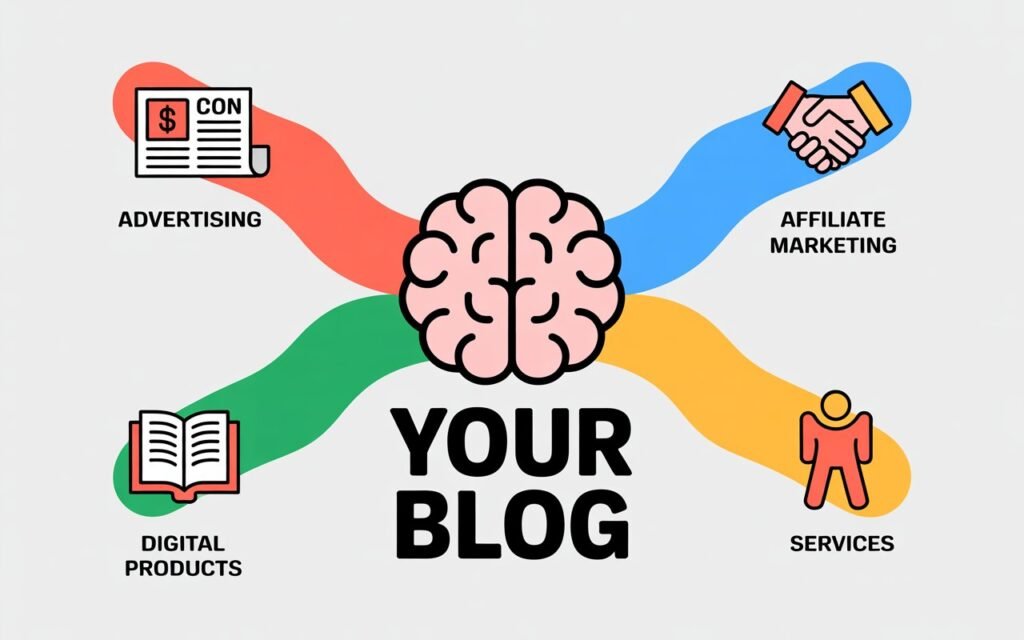
5. So, what blogging Is Used For? (The 4 Pillars of Profit)
This is the question everyone secretly wants to ask. “Okay, I get it, I’m building an asset. But how does this asset actually make money?” This isn’t just a way to make money, but a way to build trust, as I mentioned before, and when you deliver immense value for free, people start to wonder, “If this is the free stuff, imagine how good the paid stuff must be?” That’s the core of what blogging can do for you financially. It flips the script. Instead of chasing money, you attract it.
Let’s break down the four main pillars that will support your financial empire. This isn’t a get-rich-quick scheme; it’s a breakdown of the business models that successful blogs are built on. Understanding what blogging is means understanding these revenue models from day one.
Pillar 1: Advertising (The Digital Real Estate Model)
This is the most straightforward model. You have a popular blog (your digital real estate), and companies pay to place billboards (ads) on your property.
- How it works: You join an ad network like Google AdSense or, for more advanced blogs, Mediavine or AdThrive. They place ads on your site, and you get paid based on the number of people who see or click on them.
- The Pro: It’s completely passive. Once set up, it generates income without any extra work.
- The Con: You need a significant amount of traffic to make substantial income.
Pillar 2: Affiliate Marketing (The Trusted Advisor Model)
This is my favorite model and the one we focus on heavily here at EasyEnigma. It’s not about selling; it’s about recommending.
- How it works: You use and love a product (like Hostinger). You write incredibly helpful guides and tutorials about it. When a reader decides to buy that product based on your recommendation, they click your unique affiliate link, and the company pays you a commission at no extra cost to the buyer. hostinger vs bluehost article is an example for a full guide article for a product or a service.
- The Pro: You can earn significant income with less traffic than advertising, as the commissions are much higher. You’re building your empire based on giving, because what blogging is truly about is earning your audience’s trust.
- The Con: It requires you to build deep, genuine trust with your audience.
Pillar 3: Digital Products (The Expert Model)
This is where you package your own expertise and sell it directly.
- How it works: You create an eBook, an online course, a set of templates, or any other digital product that solves a specific problem for your audience. For a full list of all those methods I recommend reading how to make money blogging.
- The Pro: You have 100% control over the product and you keep nearly 100% of the profit. This is how you really start to learn what blogging truly is. The potential is unlimited.
- The Con: It takes a lot of work to create and market a high-quality product.
Pillar 4: Services (The Consultant/Freelancer Model)
Your blog can be the most powerful lead generation tool on the planet for your freelance services.
- How it works: You write articles that showcase your expertise (e.g., in web design, writing, or marketing). A potential client reads your brilliant content, realizes you’re an expert, and hires you.
- The Pro: It’s often the fastest way to generate high-ticket income from your blog.
- The Con: It’s not passive. You are still trading your time for money. This pillar shows people you know what blogging is, and how to do it professionally.
Understanding what blogging is used for means recognizing it’s not a single income stream but a central hub from which multiple, powerful revenue models can be launched.
6. The Biggest Lie They Told You About Blogging
There are a lot of lies and myths about what blogging is. But there’s one that is more destructive than all the others. One that stops more aspiring empire-builders dead in their tracks than anything else.
The lie is this: “You have to be an expert to start.”
This is the voice of the Pink Monster, Perfectionism, that I talked about in one of my stories. It’s the whisper that tells you, “Who are you to teach anyone anything? You’re not an expert. You don’t have a PhD. You haven’t made a million dollars yet.” It’s a trap designed to keep you on the sidelines forever. But after you learn and truly know what blogging is and how to create amazing articles out of nothing, then I assure you that you will be an expert at a lot of skills in no time.
Here’s the shocking truth I discovered for myself: You don’t have to be an expert; you just have to be one step ahead of the person you’re helping.
Think about it. If you’re a freshman in college, you don’t need a PhD professor to teach you about your first semester. The advice from a sophomore who just went through it is actually more valuable. They are closer to the problem. The same principle is what blogging is based on. If you’ve just figured out how to install WordPress, you are now qualified to teach someone who is still struggling with downloading it.
The journey of becoming an expert isn’t something that happens before you start blogging. It’s something that happens because you start blogging. The act of teaching forces you to learn. The act of creating content forces you to master your craft.
Don’t let the lie of “not being an expert” paralyze you. The courage to hit “Publish” on your first, imperfect article is what blogging is all about. It’s the move that transforms you from a student into a teacher, one post at a time. My first victory in the blogging world was from a simple article I’ve written a long time ago. Now I’m a pro. But it has to begin somewhere, right? So the very first important step is to how to start a blog, before anything else.
The lie of expertise is the biggest barrier to entry. The truth is, what blogging truly is, is a journey of becoming, not a display of being. Start from where you are, with what you know, and become the expert along the way.
7. Frequently Asked Questions About what blogging Is
Alright, let’s rapid-fire answer some of the nitty-gritty questions people have about what blogging entails in the modern world.
Q1: what blogging platform is better for SEO? Should I use Blogger.com or WordPress?
A: This isn’t even a debate for an empire-builder. WordPress.org (the self-hosted version) is infinitely better for SEO. You have complete control, a universe of plugins to add powerful features, and the best themes for speed and design. For a more detailed guide I highly recommend you read our comparison godaddy website builder vs wordpress. As I said before, Blogger.com is a rented room; WordPress is a city you build yourself. So for a short answer for this what is blogger com used for question, it is good for someone who does not need the website professionally or needs a temporary one.

Q2: What is a blog post and how is it different from a blog page?
A: Think of a blog post as a single entry in a journal, with a specific publication date. Posts are for timely content like news, guides, and tutorials. A blog page is a static part of your site, like your “About” page or “Contact” page. It contains timeless information. Truly understanding what blogging is means knowing when to use each one strategically.
Q3: what blogging means? And what makes a good blog?
A: In one sentence? It means consistently providing value to a specific audience on a platform that you own. What makes a good blog is a relentless focus on the reader’s problems and desires, combined with the technical excellence to get that solution in front of them via search engines. And it’s great for a long-term goal. The secret is that you do not know when the blog is going to go viral and you will get a high amount of revenue. That is why what blogging requires the most from you is patience.
Q4: I don’t know what to blog about. Where do I get ideas?
A: Never “think” of ideas. Find them. The best ideas come from your audience’s pain points. Use tools like Google’s “People Also Ask” section, Quora, or Reddit to see what real questions people are asking in your niche. Your job is not to be a creative genius but a problem-solving detective. what blogging is, is all about that.
Q5: What is guest posting and how does it relate to blogging?
A: Guest posting, or guest blogging, is when you write a blog post to be published on someone else’s blog. It’s a powerful strategy to get your name and ideas in front of a new audience and, most importantly, to get a valuable backlink to your own site, which is a massive trust signal for Google.
Q6: I’ve heard blogs are dead. What happened to blogs?
A: The “personal diary” blog is dead. The “strategic, value-driven” blog is more alive and profitable than ever. What happened is that blogs evolved. They stopped being about the writer’s life and started being about the reader’s life. If you understand what blogging is today, you’ll see it’s one of the most powerful business models on the planet.
Conclusion: The Choice Is Yours
There you have it. The unfiltered truth. what blogging is, in its purest form, is a choice.
It’s the choice to stop waiting for permission from a broken system and start building your own. It’s the choice to trade short-term comfort for long-term freedom. It’s the choice to be a creator, not just a consumer.
I’m not going to lie to you and say it’s easy. There will be moments of doubt. There will be days where you feel like you’re writing to an empty room. I have been there. I have felt that. I have looked at my Google Analytics with despair and felt that bitter frustration. But I made the decision to keep going, to stay consistent, and eventually, the needle started to move. The first dollar, the first backlink, the first thank you email… those small wins become the fuel that drives you through the hard times.
The alternative is to do nothing. To close this tab, go back to scrolling, and let this opportunity fade away, just like thousands of others have done. But you’re still reading. That means you’re different. You have the spark.
Don’t let it die out.
So, what will you choose?

If this guide opened your eyes, share it. There’s another aspiring empire-builder out there who needs to hear this message. Let’s build together.